

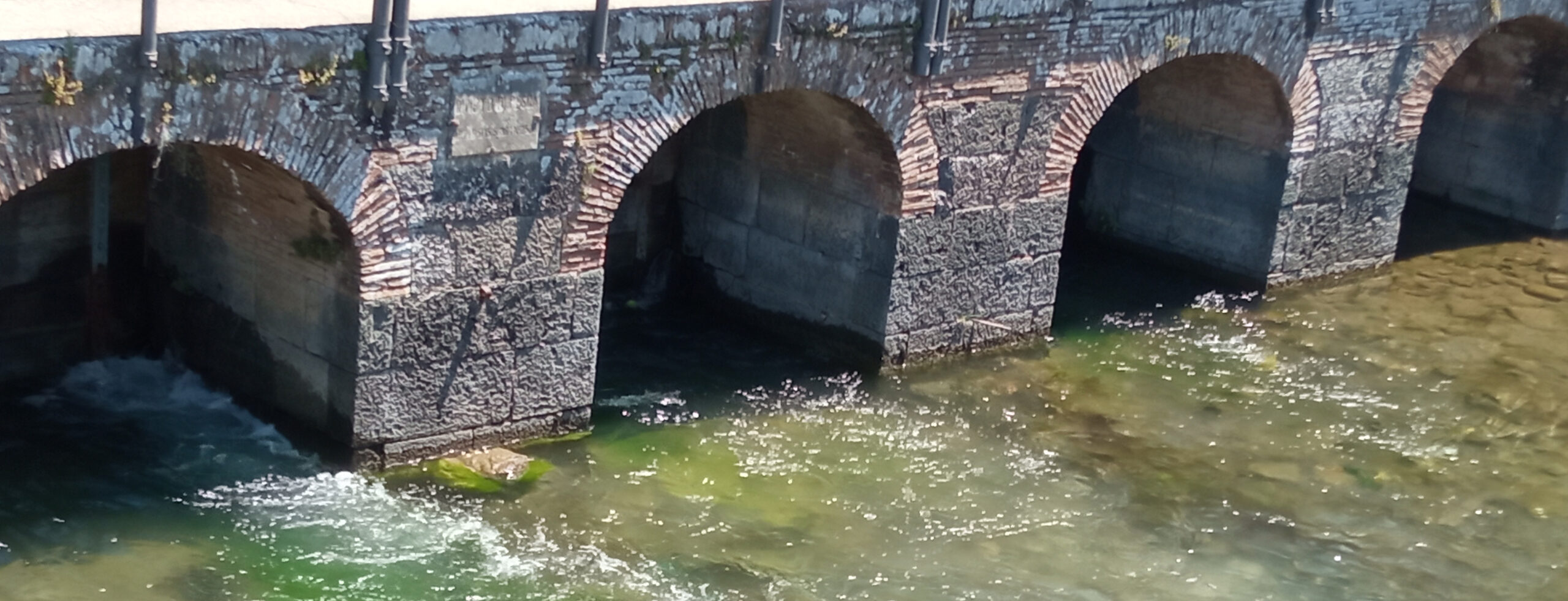
A local newspaper reports that about a week ago, ARDIS (the Regional Agency for Soil Protection, dissolved 15 years ago) immediately opened the Marta River sluice gates at the request of the mayor of Marta to clear the beaches submerged by the rain.
“As soon as the gates were opened, a large mass of water flowed to the sea, which will soon bring the sand back to the surface.”
Is this really a flood emergency requiring immediate and drastic action? No, we don’t think so.
According to current legislation—specifically, Regional Government Resolution No. 162 of April 14, 2016—the water level of Lake Bolsena must be regulated in accordance with the provisions of the “Law of Control” of Lake Bolsena Outflow.
The specifications of this “Law” are shown below. We can see that the water level was supposed to be around 110 cm on June 20. The level measured on June 20th with the fixed measuring rod in the port of Capodimonte was approximately 114 cm – only 4 centimeters higher than prescribed. It is therefore correct to try to bring the level back to what is expected.
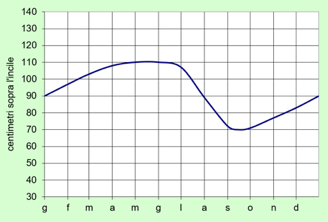
Today, June 26th, the water level has dropped to 108 cm due to the strong outflow. This level complies with the regulations of the “Law of Control”, and the gates must be closed immediately.
The real danger is that if the strong outflow of the rainwater accumulated during spring continues, the water level will fall below the level required to protect the riparian vegetation and to ensure the minimum flow of the Marta River. The level already drops naturally in the summer due to high evaporation and increased water withdrawals.
“The initiative has been well received by residents and tourists” the article states.
Many citizens are wondering, however, whether it wouldn’t have been more responsible and wise to conserve the water supply, in case the natural summer drop in the lake level were to be greater than stipulated in the control law, which is based on experiences from almost 20 years ago – when climate change was just beginning to become noticeable.
Our association has informed the relevant offices of the Lazio region (here is our letter) and is closely monitoring the situation.

